Shimadzu Nexis GC-2060: A 70-Year Legacy Culminates in a New Flagship Gas Chromatograph
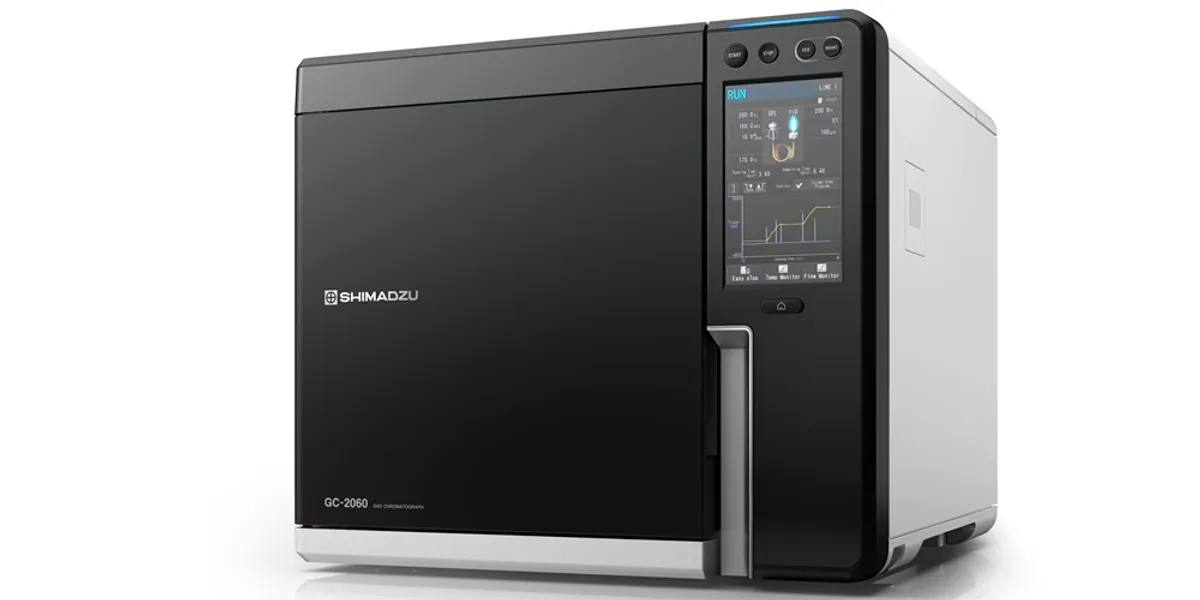
Gas chromatography is one of those analytical techniques that doesn’t get a lot of headlines outside specialist circles — until a manufacturer manages to genuinely shift the performance envelope. Shimadzu, one of the most storied names in analytical instrumentation, has done exactly that with the formal launch of the Nexis GC-2060, its new flagship gas chromatograph and the culmination of seven decades of continuous GC development.
Shimadzu announced the release of the Nexis GC-2060 as the flagship model in its gas chromatograph lineup, featuring detectors that the company claims deliver world-class sensitivity, alongside high analytical performance and enhanced analysis efficiency through intuitive workflow support functions and reduced maintenance time. Shimadzu It’s a bold claim — and one worth unpacking in detail.
The 70-Year Context: Why This Launch Matters
To understand the significance of the GC-2060, you have to appreciate Shimadzu’s unique position in the chromatography landscape. This year marks the 70th anniversary of Shimadzu Corporation’s development of Japan’s first gas chromatograph in 1956. That’s a genuine engineering heritage, and the GC-2060 is explicitly positioned as the product that distills everything learned across seven decades of iterative development.
The timing is also strategically savvy. In recent years, demand for gas analysis has grown significantly, driven by the development of new energy technologies and ongoing Green Transformation (GX) initiatives aimed at achieving carbon neutrality. Shimadzu Labs working on hydrogen fuel cells, biogas characterization, sustainable aviation fuel, and carbon capture workflows are all creating new demand for GC instruments that can perform at high sensitivity with minimal operational complexity. The GC-2060 is clearly targeted at this expanded market.
Detector Upgrades: For experienced GC users, detector performance is often the deciding factor in instrument selection. The GC-2060 introduces two substantially redesigned detectors, and both come with credible, measurable improvements.
Flame Ionization Detector (FID) — Now with a Cylinder-Free Option
The new Flame Ionization Detector delivers sensitivity enhanced by approximately 20% over previous models, with a minimum detection limit of 1.0 pgC/sec. Shimadzu Scientific Instruments For labs doing trace-level organic compound analysis — whether in environmental monitoring, pharmaceutical impurity profiling, or petrochemical fingerprinting — that improvement in the noise floor is meaningful, not marginal.
More notably, the GC-2060 features what Shimadzu describes as the world’s first multi-mode FID, equipped with both Hy/Ox and Hy/Air modes, enabling flexible selection of detector gases. Shimadzu Scientific Instruments The Hy/Ox mode is significant: the FID supports a cylinder-free mode that uses only hydrogen and oxygen generated from pure water Shimadzu, eliminating the need for a dedicated hydrogen cylinder. For labs operating in tightly regulated environments or those concerned with gas cylinder logistics and safety compliance, this is a genuinely practical innovation, reducing additional operational costs.
Thermal Conductivity Detector (TCD) — Single-Filament Redesign
The TCD redesign may actually be the more technically interesting advancement of the two. The new TCD achieves a 25% improved detection limit, with a minimum detectable quantity of 300 pg/mL, and uses single-filament technology to significantly reduce startup time. Shimadzu Scientific Instruments Traditional dual-filament TCD designs have historically suffered from thermal drift and longer equilibration windows — a real productivity bottleneck in high-throughput labs. The redesigned TCD stabilizes quickly, which is one of the features designed to maximize uptime. Lab Manager
For labs analyzing inorganic gases, permanent gases, or fixed gas mixtures in the context of energy or environmental work, the combination of improved sensitivity and faster stabilization addresses two chronic pain points in a single redesign.
The Multimode Injector: One Unit, Five Methods
Injection versatility is increasingly a competitive differentiator in mid-to-high-end GC platforms, and Shimadzu has made a significant move here. The Nexis GC-2060 Multimode Injection (MMI) unit supports five distinct injection modes in a single module: split/splitless, programmable temperature vaporization (PTV), direct injection, large-volume injection (LVI), and thermal desorption/extraction injections.
Consolidating all five modes into a single hardware module has real implications for lab flexibility. Traditionally, supporting this range of injection techniques would require either multiple instruments or physical swaps between injection units — each of which carries downtime, calibration overhead, and consumable cost. These upgrades enable laboratories to perform a broader range of analyses using a single system, improving both efficiency and return on investment. A compelling argument for labs that need to handle diverse sample matrices without expanding their instrument fleet.
Expandability Without Footprint Growth
One of the more elegant engineering choices in the GC-2060 is how Shimadzu has addressed scalability. While maintaining the same footprint as previous models, the GC-2060 expands the number of pretreatment units, sample injection ports, and detectors that can be installed. Shimadzu This enables configurations including parallel operation with dual-line analysis using the same setup, multi-application coverage with a single GC, and high-speed analysis.
Lab space is a perennial constraint, and “same footprint, more capability” is exactly the engineering discipline that procurement teams and lab managers reward. It also means existing bench layouts, ventilation setups, and utility connections remain compatible — a practical consideration that vendors often underestimate in their launch materials.
Automation, Eco-Operation, and the Intelligent Lab Angle
The GC-2060’s software and automation features reflect a broader shift in how analytical instrument manufacturers are thinking about lab productivity. A key addition is the Automatic Eco-Operation function, which learns from usage patterns to optimize performance and energy consumption. The system automatically shifts to an energy-saving standby mode when not in use and provides visibility into gas and power savings, CO₂ emissions reductions, and cost savings.
This kind of adaptive operation is increasingly expected by sustainability-conscious procurement bodies, particularly in European and Japanese regulatory environments where carbon accounting for laboratory operations is becoming normalized.
On the usability side, multiple design functions including one-touch injection unit access, tool-free column installation, automated startup and shutdown, and automated column conditioning simplify operation for users of all skill levels. Shimadzu Scientific Instruments This is a deliberate response to the skills gap challenge facing many analytical labs — as experienced GC operators retire, instruments that guide newer users through setup and maintenance workflows become operationally critical, not just convenient.
Applications and Target Markets
The Nexis GC-2060 is designed for research and development and quality control analyses across a wide range of applications, including energy, chemicals, food, environmental testing, and pharmaceuticals. Shimadzu Scientific Instruments That breadth of application coverage, combined with the multi-mode FID’s cylinder-free capability, makes the instrument particularly well-suited to:
Hydrogen economy labs conducting fuel purity analysis and blend characterization, where the Hy/Ox FID mode eliminates the safety hazards of co-locating hydrogen cylinders with other analytical gases.
Pharmaceutical QC labs where trace organic impurity detection at the low pgC/sec range is a regulatory requirement, and where high throughput demands fast detector stabilization.
Environmental monitoring labs where both organic compound screening (FID) and inorganic gas analysis (TCD) may be required from a single instrument, and where dual-line configurations can double sample throughput.
Energy and petrochemical labs where detailed hydrocarbon analysis — particularly for new fuel types — demands the highest possible detector sensitivity alongside flexible injection capability for different sample matrices.
Honest Assessment: What to Watch For
The GC-2060 is clearly a well-considered product, but a few practical questions are worth raising before a purchase decision.
Gas generation infrastructure: The cylinder-free FID mode is genuinely useful, but it assumes access to a hydrogen and oxygen generator sourced from pure water. Labs that don’t already have this infrastructure will need to factor in the additional capital and validation cost of a generator — which can offset some of the simplification benefit, at least initially.
Software ecosystem lock-in: Like most modern analytical instruments, the GC-2060’s automation and eco-operation features will be tied to Shimadzu’s LabSolutions software environment. Labs already running Shimadzu platforms will find integration straightforward; labs with multi-vendor environments should evaluate interoperability with their existing LIMS and data management workflows before committing.
Legacy method transfer: The GC-2060 maintains the same fundamental platform architecture as Shimadzu’s previous GC flagship, which should simplify method transfer. However, the significant sensitivity improvements in both detectors mean that detection limits and signal-to-noise parameters in existing methods may need to be re-validated — a workload consideration for regulated labs.
The Bottom Line
The Nexis GC-2060 is a serious instrument from a manufacturer with the institutional depth to back up its performance claims. The 20% FID sensitivity improvement and 25% TCD detection limit improvement are measurable advances, not incremental iteration. The world-first multi-mode FID with cylinder-free operation is a genuinely novel feature with practical applications beyond marketing appeal. And the combination of expanded configurability within an unchanged footprint addresses real lab constraints.
Shimadzu positions the GC-2060 as a model that establishes an enduring standard built upon 70 years of accumulated technological expertise Shimadzu — and based on the technical substance of the launch, that positioning holds up under scrutiny. Whether you’re upgrading from an aging GC platform, consolidating instruments, or outfitting a new analytical lab for emerging energy applications, the GC-2060 deserves a serious look.
For full technical specifications and to request a quote or demo, visit Shimadzu Scientific Instruments at ssi.shimadzu.com.