
Ginkgo Bioworks Takes a Step Closer to Experiments-as-a-Service with AI Integration
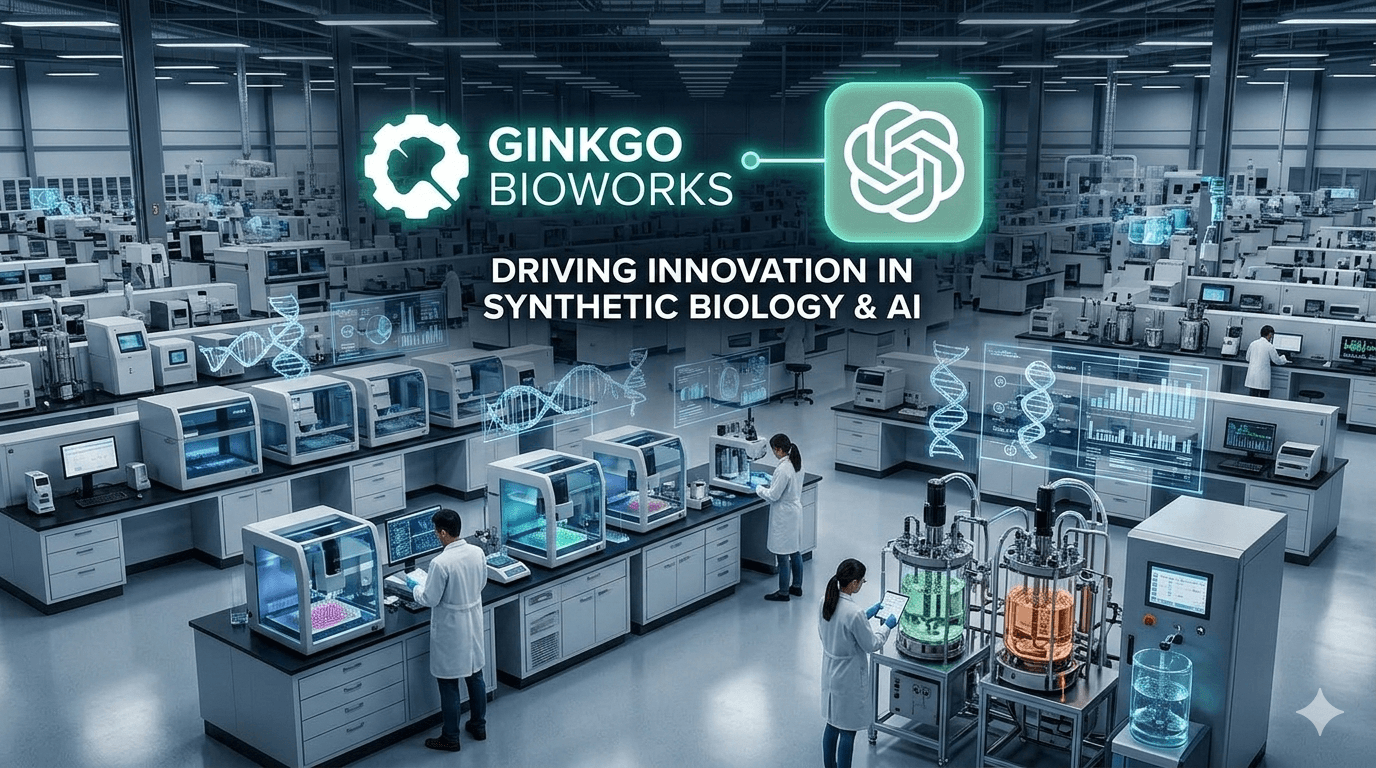
If you thought your not so comfortable wet lab jobs were safe, think again. The launch of the Cloud Lab platform by Ginkgo Bioworks represents another step toward what could be described as “Experiments-as-a-Service”. By making its autonomous laboratory accessible through an online interface, the company is attempting to shift biological experimentation closer to a cloud-computing model, where researchers specify what they want executed and receive structured digital results without directly handling laboratory infrastructure or stepping anywhere close to a laboratory.
The initiative builds on earlier collaboration with OpenAI, in which an advanced language model successfully ordered and executed experiments within Ginkgo’s automated laboratory environment. With the public launch of Cloud Lab, this capability is no longer limited to internal or collaborative demonstrations. External users can now submit experimental requests through a web portal and receive feasibility assessments and estimated pricing.
The Data In, Data Out Model
The current structure of the service is deliberately straightforward. Users describe a defined experimental protocol, and the autonomous laboratory executes it from start to finish. The process includes constructing DNA, running assays, and returning digital data outputs. At this stage, Ginkgo does not accept external biological samples, nor does it ship physical materials back to users. The system operates entirely as a digital exchange: experimental design specifications are submitted, and experimental data are returned.
This approach reflects an effort to reduce the operational and capital burden traditionally associated with laboratory research. Establishing a biotechnology laboratory frequently requires substantial upfront investment in equipment, facilities, regulatory compliance, and specialized personnel. These costs can exceed tens of millions of dollars before meaningful data generation begins. By contrast, a cloud-based model converts these fixed costs into usage-based expenses tied to reagent consumption and instrument time.
Certified Protocols and Deliberate Constraints
At launch, Cloud Lab offers three Ginkgo Certified Protocols. Two focus on cell-free protein expression, while the third enables programmable bacterial pixel art as a demonstration of controlled biological patterning.
The cell-free expression workflows allow users to submit DNA sequences and receive data on how effectively a candidate protein expresses in a cell-free synthesis system. For example, a company developing a therapeutic protein could input the DNA sequence of a candidate molecule and receive quantitative data on expression performance. At present, expression efficiency is the primary readout available. Over time, the platform is expected to incorporate additional assays, potentially including measurements of activity, stability, binding affinity, or other functional characteristics.
The decision to begin with certified protocols is intentional. According to Ginkgo’s co-founder and chief executive officer Jason Kelly, previous cloud laboratory efforts encountered challenges when users submitted highly customized protocols that had not been validated within the automation environment. When such experiments failed due to design flaws, dissatisfaction often fell on the service provider rather than on the experimental design itself.
To mitigate this risk, Ginkgo requires that launch protocols undergo dry runs, wet runs, and formal biovalidation before being offered for purchase. This constraint limits flexibility in the short term but aims to improve reliability and user confidence during early adoption.
Flexibility and Future Expansion
A common question concerns how adaptable the system is beyond predefined workflows. For instance, could a user specify a fully custom enzymatic assay with defined substrates, cofactors, temperature conditions, and pH parameters for iterative enzyme engineering? Send and specify specific samples for experimentation.
At present, the answer is largely no. The system remains tightly constrained to certified workflows. Custom assays that fall outside validated templates are not broadly available through the standard interface.
However, Ginkgo has indicated interest in working with beta testers who are willing to engage in more variable experimental designs. In such cases, the expectation is that the laboratory equipment will function correctly, but experimental outcomes may fail if the submitted protocol contains design or programming errors. This distinction clarifies the division of responsibility between equipment reliability and experimental design integrity.
The longer-term ambition is broader. The company has suggested that future iterations could extend beyond cell-free systems to include human cell line editing for disease modeling, microbial strain engineering for industrial production, agricultural biotechnology assays for mechanism-of-action studies, and other application areas. The stated end goal is that any experiment one might conduct at a laboratory bench to advance a biotechnology product could eventually be executed through a cloud-based laboratory interface, provided the necessary equipment and reagents are available.
The Broader Cloud Lab Landscape
Ginkgo’s approach builds upon earlier efforts in remote and automated laboratory services. Emerald Cloud Lab offers a remotely operated laboratory platform where researchers design and control experiments through a digital interface, with physical execution occurring in centralized facilities. Strateos, formerly known as Transcriptic, has similarly developed automated laboratory infrastructure that allows customers to run standardized and custom protocols in a robotic environment.
The distinguishing feature of Ginkgo’s current launch lies in its emphasis on certified, biovalidated protocols at the outset and its integration of an AI agent capable of assessing feasibility and estimating cost. Rather than opening immediately to fully custom experimentation, the platform is proceeding incrementally.
Experiments-as-a-Service
The concept underlying these developments resembles the transition that occurred in computing infrastructure over the past two decades. In cloud computing, organizations shifted from owning and maintaining servers to renting computational resources on demand. Cloud laboratory services aim to produce a similar shift in biological experimentation, transforming laboratory execution from a capital-intensive activity into a service accessed through software.
Whether this model becomes widely adopted will depend on reliability, cost efficiency, regulatory considerations, and user trust. Nonetheless, the introduction of Cloud Lab by Ginkgo Bioworks represents a further movement toward scalable, remotely accessible experimental infrastructure. In that sense, it contributes to the gradual emergence of Experiments-as-a-Service as a distinct operating model within biotechnology.


