Medra.ai Gets a Boots to Forsee the Future of AI Drug Discovery
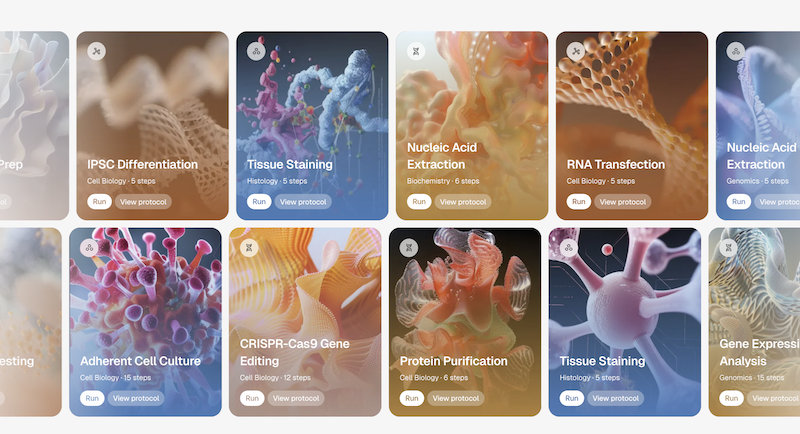
The race to reinvent drug discovery is accelerating—and Medra.ai is quickly emerging as a key player. Following a $52 million funding round, the company is building a next-generation platform that integrates artificial intelligence with automated laboratory robotics. The goal: to remove the biggest bottleneck currently facing research: Humans. The ultimate aim is to create a fully autonomous “self-driving lab” capable of designing, executing, and learning from experiments with minimal human intervention.
Medra.ai’s Closed Loop Drug Discovery
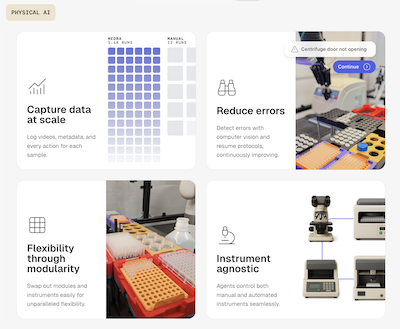
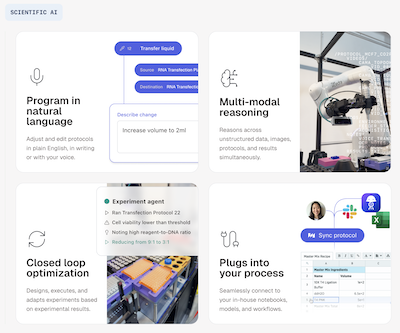
At the heart of Medra’s approach is a closed-loop system that generates hypotheses, enables robotic systems carry to out high-throughput experiments, and the resulting data feeds back into the system to continuously improve predictions. This tight integration eliminates traditional bottlenecks in pharmaceutical R&D, enabling faster iteration cycles and significantly reducing the cost and time required to identify viable drug candidates.
Unlike conventional drug discovery, which relies heavily on manual workflows and sequential testing, Medra’s platform emphasizes automation, scalability, and continuous learning. By combining computation with physical experimentation, the company is helping bridge one of the biggest gaps in AI-driven biology.
Shifting Toward Autonomous Science
Medra’s model reflects a broader transformation across the life sciences industry. Drug discovery is moving away from intuition-led experimentation toward data-driven, machine-led systems. Autonomous labs—powered by AI and robotics—are enabling parallel experimentation at unprecedented scale.
This shift is not just about speed. It’s about fundamentally rethinking how science is conducted, turning laboratories into programmable environments where experiments can be designed, executed, and optimized in real time.
Future of Dark Labs
Medra is not alone in this rapidly evolving ecosystem. Several companies are making significant strides in AI-driven drug discovery:
- Recursion Pharmaceuticals is leveraging high-content imaging and machine learning to map cellular biology at scale
- Insilico Medicine already has advanced AI-designed drug candidates into clinical trials, showcasing real-world impact
- Anthropic acquired Co-efficient Bio to give itself a boost into drug discovery and automating scientific experimentation
These companies highlight the growing maturity of AI in pharma, moving from theoretical promise to clinical validation.
The Rise of Cloud Labs and Lab Automation
Supporting this transformation is a new generation of lab infrastructure providers. Platforms like Strateos and Emerald Cloud Lab allow researchers to run experiments remotely through programmable lab environments. This “lab-as-a-service” model aligns closely with Medra’s vision, where physical experimentation becomes abstracted into software workflows. It enables global collaboration, scalability, and reproducibility in ways traditional labs cannot.
The momentum in this space is reinforced by a wave of recent announcements:
- Generate Biomedicines is using generative AI to design novel proteins.
- Absci is developing AI-designed biologics with improved therapeutic properties.
These innovations demonstrate how AI is expanding beyond small molecules into complex biologics, opening new frontiers in medicine.
What Sets Medra.ai Apart
While many studies focus on specific layers of the drug discovery stack, Medra aims to unify them. Its full-stack approach—combining AI models, robotic execution, and data infrastructure—reduces friction between prediction and validation. Medra is building and programming robots with artificial intelligence to conduct and improve biological experiments, and has already signed an agreement to work on early drug discovery with Genentech.
Despite the promise, challenges remain. Autonomous labs depend heavily on data quality, model interpretability, and robust validation. Regulatory frameworks will also need to evolve to accommodate AI-driven discovery processes and accelerate the pace of clinical research and drug approvals.
However, Medra’s and other companies investing billions in to automated drug discovery have a clear vision: the convergence of AI and robotics is transforming drug discovery into a programmable, scalable system to create a seamless future of drug discovery. As funding increases and technology matures, self-driving labs are moving from concept to reality.
The result could be a future where life-saving drugs are discovered faster, cheaper, and with unprecedented precision.