Qitan Tech vs Oxford Nanopore: Inside the Two-Horse Race for the Future of Nanopore Sequencing

For more than a decade, Oxford Nanopore Technologies was effectively alone in the commercial nanopore DNA sequencing, a market that it created. All that changed in late 2021, when a Chengdu-based startup called Qitan Technology (齐碳科技, qitantech.com) shipped China’s first domestically built nanopore sequencer and became, by most accounts, only the second company in the world to commercialize the nanopore sequencing. Four years later, Qitan now offers a low-, medium-, and high-throughput product line that maps almost one-for-one to Oxford Nanopore’s MinION/GridION/PromethION lineup — and is starting to draw direct, peer-reviewed comparisons. This article walks through who Qitan is, what they sell, and how each product stacks up against its Oxford Nanopore’s counterpart.
Who is Qitan Technology?
Qitan Technology was founded in 2016 in Chengdu, Sichuan, China, by an interdisciplinary team that includes co-founder and Chief Scientist Dr. Jingwei Bai — a UCLA materials-sciences PhD who completed postdoctoral training at the MIT-IBM Watson AI Lab and previously also worked at Illumina.
With a cumulative reported funding is around US$186M, funding has been substantial for a Chinese deep-tech company. Published funding rounds show that their Series A (~RMB 100M, 2020) and Series B (~RMB 400M, 2021) rounds raised RMB 700 million (US$103.7 million), followed by a Series C round led by Meituan, with participation from Capital Health Fund (Huagai Capital) and BioTrack Capital. The company has built a production base in Chengdu Tianfu International Biological City with capacity for roughly 2,000 sequencers and one million flow cells / reagent kits per year, and reports holding around 30 global patents.
Strategically, Qitan’s pitch is to be the domestic-Chinese alternative to a foreign-dominated market. By the company’s own September 2025 update, the QNome low-throughput platform has been deployed with more than 300 users and the QPursue medium-throughput platform with more than 200 users across research, clinical, public-health, agricultural, forensic, and environmental settings in China alone. The company has plans on paper for a global launch as soon as this year.
Qitan Product Catalogue
Qitan’s portfolio now covers all three throughput tiers. All three are stranded protein-nanopore platforms with enzyme-controlled DNA translocation — the same architectural family as Oxford Nanopore.
1. QNome — low-throughput, portable
- QNome-9604 (Sept 2020) — the prototype that opened Qitan’s Early User Program. Independent academic testing reported mean read length around 6 kb, longest reads up to ~57 kb, and mean read accuracy near 81%, generating up to ~1 Gb per run.
- QNome-3841 (Dec 2021) — first commercial release, a handheld single-flow-cell device. Launch specs: about 1–1.5 Gb of data in eight hours, single-read accuracy around 90%, consensus accuracy of 99.9%, with read lengths beyond 300 kb. Promotional materials later quoted maximum read lengths of at least 2 Mb and up to 3 Gb per flow cell.
- QNome-3841hex (June 2022) — a six-flow-cell desktop variant. It contains six flow cells and can produce up to 18 Gb of data.
Flow cell: QCell-384 / QCell-3841. Use case: small genomes, pathogen ID, targeted sequencing, field/clinical deployment.
2. QPursue — medium-throughput
Launched in August 2023, the QPursue line is Qitan’s analog to a benchtop GridION-class instrument. It comes in two configurations:
- QPursue-6k — single flow cell, portable.
- QPursue-6khex — six-flow-cell desktop. Each QCell-6k flow cell is rated at ~60 Gb, for a per-instrument theoretical output around 360 Gb. Community-curated technical reviews list the QPursue-6khex at the Q20 accuracy tier with megabase-scale read lengths and place it in the “medium-scale, lab-based research” segment.
Use cases include human exomes/small panels, animal and plant genomics, and microbiome work.
3. QPinnacle2 — high-throughput (launched Sept 23, 2025)
QPinnacle2 is the newest and most ambitious instrument and is the device that closes the gap between Qitan and Oxford’s PromethION-class systems. Qitan disclosed three core specs:
- A designed throughput of 400 Gb per chip and 800 Gb for the entire instrument, supporting application scenarios requiring large data volumes such as large-scale genome research and human cohort studies.
- 6 Gb of data generated per hour.
- Two chips that run independently with pause/resume support.
Critically, QPinnacle2 is also the launch vehicle for Qitan’s new O2 biochemistry system, which the company claims pushes Chinese nanopore sequencing to 99% raw single-read accuracy for the first time. According to Qitan, the O2 system contributes (i) a redesigned pore protein with cleaner per-base current steps, (ii) a new motor/speed-control protein that lowers pore-blockage rates, and (iii) a new polymer membrane and membrane-forming process that reduces noise by ~20% and achieves a high-quality membrane-formation rate above 90%. The O2 system is also being retrofitted to QNome and QPursue.
The Oxford Nanopore Reference Lineup
Oxford Nanopore’s range covers the same three tiers, with more years of iteration behind it, with Qitantech catching up fast.
1. Flongle — accessory-tier “test tube” runs
The Flongle is an adapter that turns a MinION or GridION into a host for single-use mini flow cells. Designed for very small or frequent experiments, a Flongle flow cell delivers up to ~2.8 Gb of data and is intended to be the cheapest, fastest way to get sequencing data on demand. Still missing from Qitan’s line up.
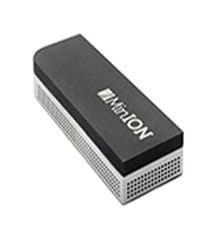
2. MinION — palm-sized portable
The MinION (current revision Mk1D, with the Mk1C now discontinued) is a USB-C-connected, laptop-tethered sequencer that takes one MinION flow cell with up to 512 nanopore channels. Read lengths span ~20 bp to >4 Mb, and a MinION flow cell can deliver up to about 50 Gb in a 72-hour run. Oxford Nanopore highlights Peltier temperature control allowing sequencing in 10–35 °C ambient environments — i.e. genuinely field-deployable.
3. GridION — benchtop “five-MinION-in-a-box”
The GridION is a benchtop instrument that runs up to five MinION (or Flongle) flow cells simultaneously with onboard compute. Per Oxford Nanopore documentation, it offers up to five independent MinION Flow Cells to use as needed, giving a theoretical maximum aggregate output in the ~250 Gb range per 72-hour run.
4. PromethION family — high-throughput
This is Oxford Nanopore’s production tier:
- PromethION 2 / P2 Solo — a compact two-flow-cell unit (Solo leverages an existing GridION; Integrated is standalone). Each PromethION flow cell can deliver up to ~290 Gb, so a single P2 run can theoretically hit ~580 Gb.
- PromethION 24 (P24) — 24 independently controllable PromethION flow cells.
- PromethION 48 (P48) — 48 flow cells; Oxford’s flagship for population-scale and production sequencing.
PromethION flow cells contain up to 2,675 nanopore channels each — five times the MinION cell. With Kit 14 chemistry on R10.4.1 pores, Oxford Nanopore Technologies advertises raw single-read accuracy at the Q20+ tier (≥99%) and duplex accuracy past Q30 (99.9%).
Head-to-Head: Qitan vs Oxford Nanopore by Tier
The following table summarizes the publicly reported specifications of comparable products. Where Qitan publishes only theoretical/designed maxima, that is noted; Oxford’s figures are also theoretical maxima per official documentation.
| Tier | Qitan | Output (theoretical) | Oxford counterparts | Output (theoretical) |
|---|---|---|---|---|
| Smallest / single-use | — (no Flongle equivalent) | — | Flongle | up to ~2.8 Gb |
| Portable single-cell | QNome-3841 | ~1.5 Gb / 8 h, up to ~3 Gb | MinION (Mk1D) | up to ~50 Gb / 72 h |
| Desktop multi-cell | QNome-3841hex | up to ~18 Gb (6 cells) | — | — |
| Benchtop multi-cell | QPursue-6khex | ~60 Gb × 6 ≈ 360 Gb | GridION | ~50 Gb × 5 ≈ 250 Gb |
| High-throughput | QPinnacle2 | 400 Gb/chip × 2 = 800 Gb | PromethION P2 / P24 / P48 | 290 Gb × 2 / × 24 / × 48 (up to ~14 Tb on P48) |
A few qualitative comparisons follow.
1. Portable tier: QNome-3841 vs MinION
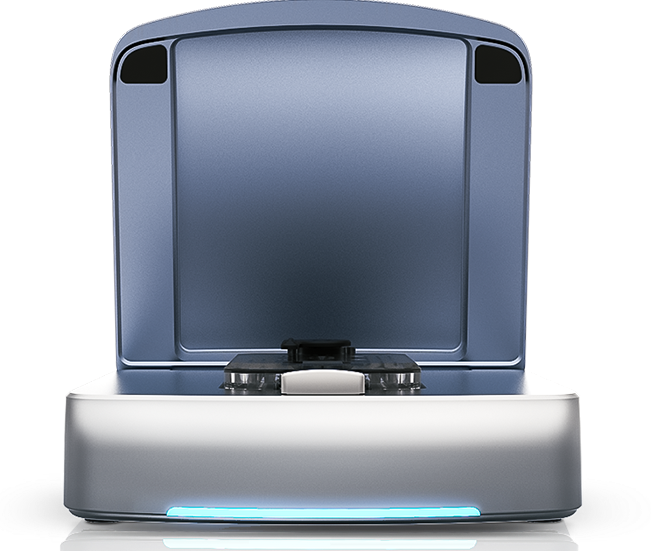
The MinION wins on raw throughput by an order of magnitude (50 Gb vs 1.5–3 Gb) and on read accuracy with current chemistry (Q20+ raw vs ~90% raw on QNome). It is also genuinely globally available, with worldwide service and a large user community. The QNome’s structural advantage is that, like the MinION, it’s portable, USB-connected, and aimed at point-of-need use, but it ships into a Chinese market where MinION procurement has historically been slower and more expensive. For low-complexity tasks like microbial ID, viral surveillance, or short targeted panels, the QNome can deliver enough data — but for anything requiring high accuracy at single-base resolution (e.g. forensic STRs, SNVs), the MinION still has the edge.
A 2024 study in Electrophoresis directly compared the two on forensic short tandem repeats and found that overall accuracy for diploid STRs and haploid STRs was 53.5% (378 of 706) and 82.7% (134 of 162), respectively, using QNome — remarkably lower than MinION at 84.5% (diploid) and 90.7% (haploid) with a similar amount of sequencing data. A more recent 2026 bioRxiv preprint testing the QNome-3841 on amplicon barcoding found Qitan recovered valid barcodes from nearly as many specimens as ONT (~98%), but with slightly lower fidelity and a particular weakness on G/C homopolymers — a homopolymer issue that ONT itself struggled with for years before R10 chemistry.
2. Benchtop tier: QPursue-6khex vs GridION
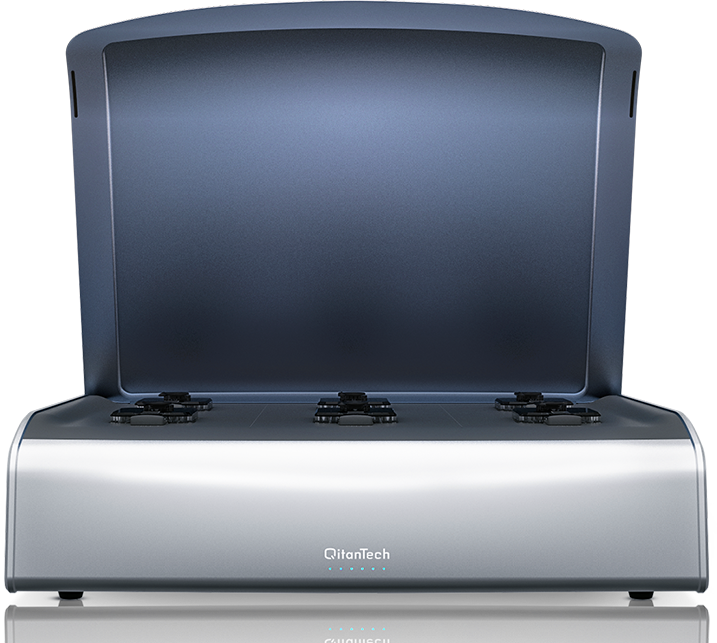
This is the most flattering comparison for Qitan. On paper, the QPursue-6khex’s 6 × 60 Gb ≈ 360 Gb beats the GridION’s 5 × 50 Gb ≈ 250 Gb, and Qitan claims Q20 accuracy on this platform. In practice, however, ONT’s six-figure user base, mature library prep kits, EPI2ME / MinKNOW software, and worldwide support infrastructure are decisive for most labs outside China. The QPursue is genuinely competitive on throughput — but the GridION wins on workflow maturity, third-party tooling (medaka, dorado, methylation callers, adaptive sampling), and the simple ability to procure a replacement instrument on a phone call almost anywhere in the world.
3. High-throughput tier: QPinnacle2 vs PromethION
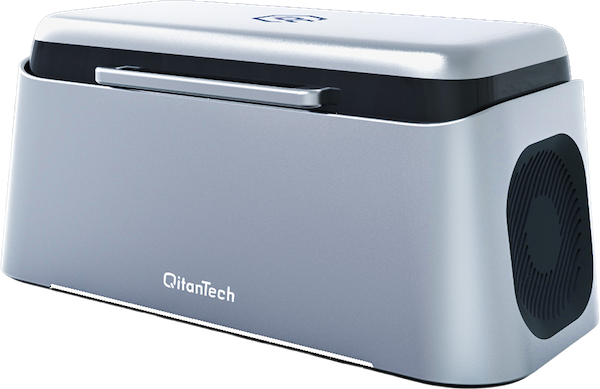
QPinnacle2 is the closest Qitan has come to a true peer-to-peer challenge. Its 800 Gb per run on two independent chips, 99% raw accuracy from the O2 system, and 6 Gb/hour generation rate land it in roughly the same neighborhood as a PromethION P2 (theoretical ~580 Gb). But Oxford’s PromethION line scales much further: P24 multiplies that by 12, and P48 by 24, putting the absolute ceiling well into the multi-terabase range per run — territory that Qitan currently has no announced product to address.
Equally important, Oxford’s PromethION has been deployed at population scale (the UK Biobank long-read project, the All of Us program-adjacent work, and similar) and has years of accumulated published methods. QPinnacle2 was launched in late September 2025; independent peer-reviewed validation is, as of writing, just starting to emerge.
Technology and Accuracy
Both companies rely on the same fundamental physics: a protein nanopore embedded in a membrane, an electrolyte gradient that drives single-stranded nucleic acid through it, and a motor protein on the cis side that ratchets DNA/RNA base-by-base while a sensor reads the ion-current modulation. Both use neural-network basecallers.
The differences are in the proteins, the chemistry, and the chip:
- Pore design. Oxford’s commercial workhorse is now R10.4.1; the architecture has gone through many generations (R7 → R9 → R10) with measurable accuracy gains each time. Qitan’s O2 system, launched with QPinnacle2, is its biggest pore-and-chemistry overhaul to date and is what underpins its 99% raw-accuracy claim.
- Accuracy trajectory. A 2024 review of the field summarized the state of play this way: In Nov 2021, Oxford Nanopore announced the launch of Kit 12 (quality-score 20+, Q20+) and R10.4 flowcells, boosting raw read accuracies surpassing Q20 (accuracy: 99%) and duplex sequencing accuracies exceeding Q30 (99.9%). Qitan reached the 99% raw mark roughly four years later, so the gap is closing but still real.
- Reusable consumables. Neither vendor reuses flow cells across runs the way some competitor architectures (e.g., Geneus Tech’s chip) attempt to.
- Software ecosystem. Oxford ships MinKNOW for run control, dorado/guppy for basecalling, EPI2ME for analysis, and supports a deep open-source community (medaka, NanoPlot, Flye, etc.). Qitan ships the QNOME software stack and tooling for its own data formats; community tooling exists but is much smaller and largely Chinese-language.
- Methylation and direct RNA. Oxford has built-in 5mC/5hmC/6mA methylation calling and a dedicated direct RNA chemistry (RNA004). Qitan has demonstrated methylation detection in the literature but has a smaller validated chemistry portfolio.
6. Availability, Pricing, Ecosystem
- Geographic reach. Oxford Nanopore sells globally through direct sales and channel partners. Qitan, despite international ambitions, remains predominantly a Chinese-market vendor; outside China it’s most often encountered through collaborative research papers rather than independent commercial procurement. A frequently raised question — even by sympathetic analysts — is whether Qitan’s strand-sequencing-with-motor-protein architecture would face IP exposure if pushed aggressively into Western markets.
- Pricing. Qitan does not publish global list prices; in China it positions itself as the value-tier domestic option, and a key part of its pitch is import-substitution economics. Oxford’s MinION starter pack remains the cheapest entry point in commercial nanopore sequencing globally.
- Regulatory. Oxford instruments are sold as Research Use Only (RUO) globally, with a separate Oxford Nanopore Diagnostics line for IVD-regulated use in some jurisdictions. Qitan instruments are RUO in China; international regulatory clearances are not broadly published.
- Community and citations. Oxford has tens of thousands of peer-reviewed papers using its instruments. A 2024 analysis observed that, despite being the second commercial supplier, Qitan still has “a surprising dearth of information” in Western media and most published validation comes from Chinese groups.
7. Strengths and Weaknesses, Side by Side
Where Qitan currently leads or is on par:
- Per-flow-cell throughput at the medium tier (QPursue-6khex, ~60 Gb/cell) is competitive with MinION flow cells.
- Aggressive iteration cadence — major product every two years since 2021.
- Domestic China supply chain resilience for Chinese customers.
- O2 chemistry brings raw accuracy into the 99% bracket, removing what was historically the most damning critique of the platform.
Where Oxford Nanopore still leads, often by a wide margin:
- Maximum scale (P48 ≫ QPinnacle2).
- Read accuracy (Q20+/Q30 duplex), homopolymer handling, and modified-base calling.
- Software ecosystem and third-party tool support.
- Global availability, support, and regulatory footprint.
- Direct RNA sequencing chemistry (RNA004).
- Maturity, community size, and depth of validated applications.
The honest summary: Qitan today is roughly where Oxford Nanopore was in the 2018–2020 window — capable, real, and improving fast — but with a one-product-per-tier portfolio and a dominantly domestic footprint. Oxford Nanopore is the global incumbent with deeper chemistry, deeper software, and deeper scale. The interesting question over the next two to three years is not whether Qitan will catch up on the low end (it largely has) but whether QPinnacle2 plus an O2-class chemistry refresh on QNome and QPursue is enough to make Qitan a credible international challenger — or whether Oxford’s IP, ecosystem, and continued chemistry roadmap keep the moat intact.
8. Conclusion
Qitan Technology has done something genuinely difficult: build a working, commercially shipping nanopore sequencing platform from scratch in a market where Oxford Nanopore had a near-decade head start. The QNome, QPursue, and QPinnacle2 lineup is no longer a curiosity — it’s a recognizable, end-to-end product matrix that mirrors Oxford’s own. For Chinese research, clinical, agricultural, and forensic labs that prioritize domestic sourcing or cost, Qitan is a credible primary vendor.
For users outside China, or for applications that demand the absolute frontier of accuracy, scale, or multi-omics chemistry, Oxford Nanopore remains the default — and likely will for some time. But for the first time since the field began, the default isn’t the only option, and the gap between #1 and #2 is closing at every tier of the stack.