Waters’ New omniDAWN™ MALS Photometer Bridges the Gap Between UHPLC Speed and Advanced Biologics Characterization
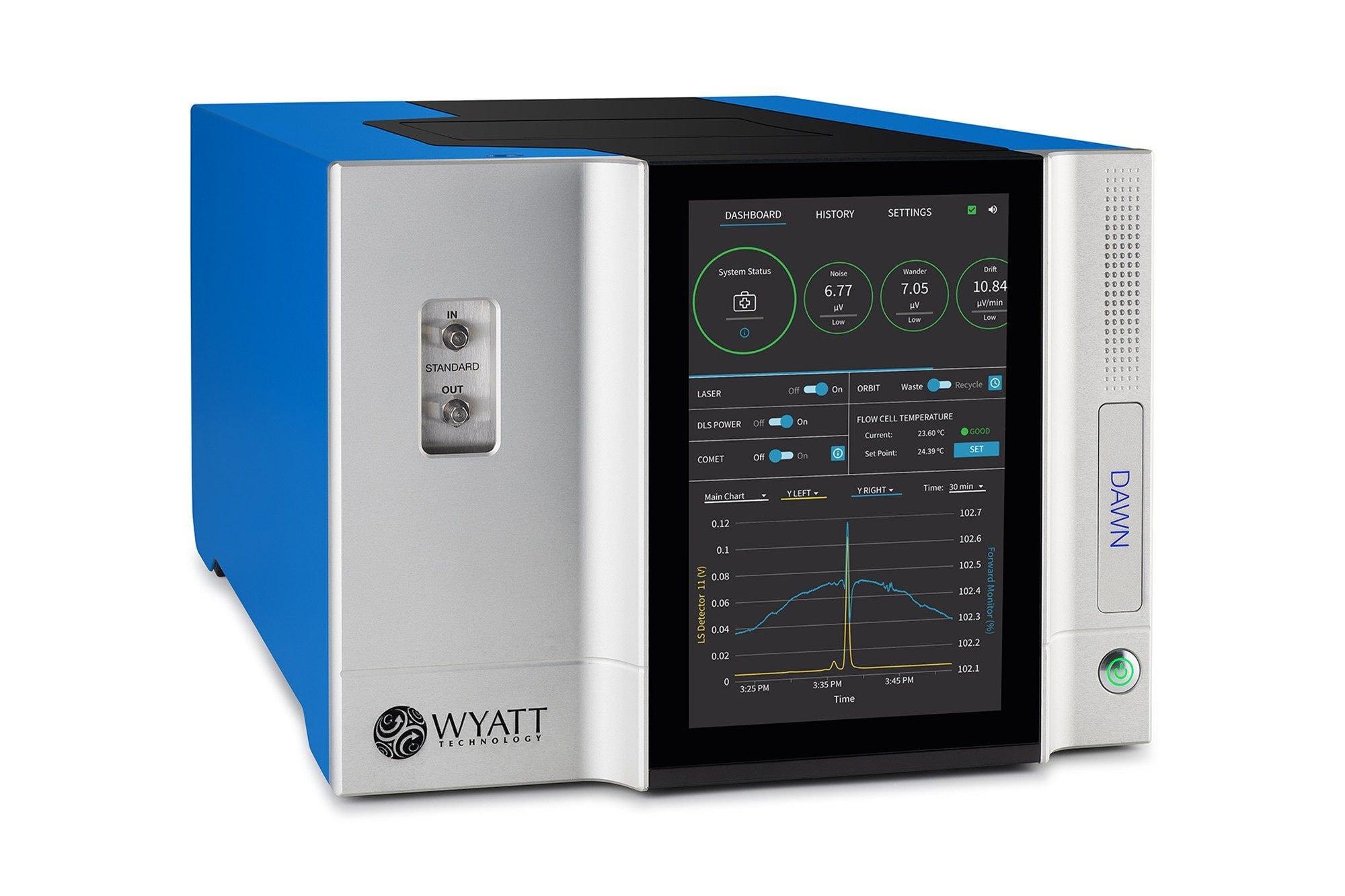
Waters Corporation has announced the launch of its omniDAWN™ Multi-Angle Light Scattering (MALS) Photometer aimed at converging the gap between high-speed chromatography and advanced molecular characterization. Designed specifically for modern UHPLC and UPLC workflows, the system aims to address a long-standing bottleneck in analytical science: the mismatch between increasingly rapid separations and comparatively limited detection technologies.
As biologics and complex therapeutic modalities continue to reshape drug development pipelines, tools capable of delivering both speed and analytical depth are no longer optional—they are foundational.
A Detector Built for the Pace of Modern Chromatography
The omniDAWN Photometer introduces what Waters describes as the first extended-range MALS detector compatible with UHPLC and UPLC systems. At its core is an 18-angle detection system that enables absolute molar mass and size measurements without relying on calibration standards—an important distinction in workflows involving heterogeneous or novel biomolecules.
This development directly addresses a key limitation in traditional MALS systems, which often struggle to keep pace with the faster flow rates and narrower peaks characteristic of UHPLC separations.
The performance gains are notable. Waters reports up to fourfold faster chromatographic run times, alongside a tenfold improvement in measurable molar mass and size range. Equally significant are the operational efficiencies: sample consumption can be reduced by up to 50%, while solvent usage drops by approximately 40%. For high-throughput laboratories, these improvements translate into both cost savings and increased sustainability—two pressures that are increasingly shaping procurement decisions.
Rob Carpio, Senior Vice President of Waters Analytical Sciences, framed the launch as a necessary evolution rather than a luxury upgrade, noting that advances in separation science have outpaced detection capabilities until now.
Enabling Deeper Insights into Complex Biologics
The expanding landscape of biologics—including antibody-drug conjugates (ADCs), viral vectors, and lipid nanoparticles (LNPs)—demands analytical tools capable of resolving subtle structural differences across large and often heterogeneous populations.
The omniDAWN system extends UPLC-compatible sizing capabilities from approximately 50 to 500 nm in radius, opening the door to more reliable characterization of these larger entities. This is particularly relevant in applications such as biosimilarity studies, where small differences in aggregation or size distribution can have significant regulatory and clinical implications.
By delivering absolute molar mass and size measurements, the system reduces reliance on column calibration standards, which can introduce variability and limit reproducibility across labs. Its low-dispersion design further enhances sensitivity, allowing researchers to distinguish between monomers, aggregates, and fragments—even at low concentrations.
This capability is not just incremental—it reflects a broader shift toward more precise and data-rich characterization of therapeutic candidates earlier in the development cycle.
Software-Driven Workflows and Regulatory Readiness
Complementing the hardware is integration with ASTRA™ Software, which combines MALS data with UV and refractive index detection to provide a multidimensional view of molecular properties within a single run. Dedicated workflows for ADCs, LNPs, and viral vectors suggest a deliberate focus on high-growth application areas.
From a compliance standpoint, the software meets both 21 CFR Part 11 and EU Annex 11 requirements, positioning the system for use in regulated environments such as GMP labs and quality control settings. Future compatibility with Empower™ Software—Waters Empower Software—is expected in 2026, further aligning the platform with existing Waters ecosystems.
A Strategic Step Forward for MALS Technology
What makes the omniDAWN launch particularly significant is not just its specifications, but its timing. As newer therapeutic modalities push the boundaries of molecular size, complexity, and heterogeneity, analytical technologies must evolve in parallel.
Stacey Louie of the University of Houston highlighted this broader impact, noting that extending MALS capabilities to UHPLC and UPLC enables more flexible separations paired with absolute measurements—an essential combination for fields ranging from drug delivery to environmental nanotechnology.
In that context, the omniDAWN Photometer represents more than a product release. It reflects a recalibration of analytical priorities, where speed, accuracy, and scalability must coexist rather than compete.
Looking Ahead
With global availability expected in summer 2026, the omniDAWN MALS Photometer enters a market increasingly defined by biologics innovation and the need for high-throughput, high-fidelity analysis.
For laboratories navigating the complexities of next-generation therapeutics, the question is no longer whether advanced detection is needed—but whether existing tools can keep up. Waters is clearly betting that the answer, until now, has been no.