CRISPR/Cas9 Successfully Modifies T Cells
Reachout to Researchers with Our Extensive Marketing Network
Modern scientific marketing partner built for life science brands


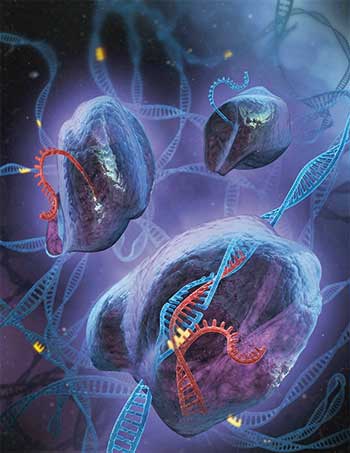
Scientists from University of California San Francisco (USCF) have found an improved method to successfully edit the genome of mature human T cells. The research team introduced the editing tools Cas9 and guide RNAs, preassembled as a ribonucleoprotein, by electroporation. The work, published in PNAS, can have future therapeutic applications in patients with immune disorders.
T cells or lymphocites are a type of white blood cells that have a role in cell-mediated immune response. T cell genome modification has long been sought after: cell based therapies could be directed against HIV, cancer, autoimmune diseases, etc. By editing the T cell genome, disease-causing mutations could be erased, and other functions could be tweaked or enhanced. In this context, the arrival of the CRISPR/Cas9 genome editing technology was promising but worked inefficiently when applied to T cells.
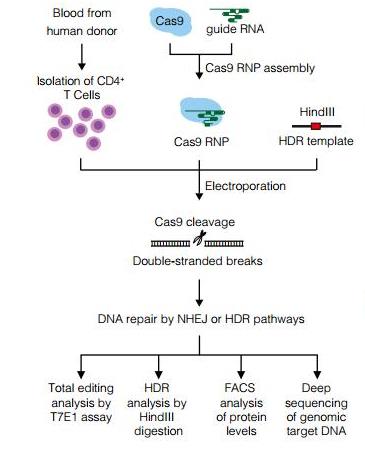
source: www.pnas.org/content/early/2015/07/21/1512503112.full.pdf
Electroporation of Cas9 ribonucleoproteins
Marson and coworkers spent many months trying to optimize the editing system and finally found a new approach to insert Cas9 in the cell. The classic way consists of introducing the Cas9 protein with a virus or plasmid and making the cell produce the guide RNAs from an independently inserted cassette. Marson and his team introduced a pre-assembled ribonucleoprotein: Cas9 with RNA guides, and introduced it by electroporation. In this way they efficiently engineered two genes. CXCR4, that codes for a surface receptor used by HIV to enter T cells, was diminished by 40%. The PD-1 gene was also succesfully edited, avoiding expression of a protein that aborts attacks to cancer cells.
Editing was correct in 20% of the modification events. This efficiency paves the way for the use of modified T cells in experimental projects. The next step in a clinical setting is cell therapy: patient T cells will be collected, edited, selected, multiplied and reintroduced in the patient.
Source: genengnews