Researchers Microprint Artificial Cells in Large Scale
Reachout to Researchers with Our Extensive Marketing Network
Modern scientific marketing partner built for life science brands


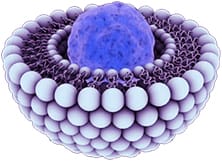

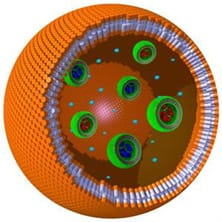
They have developed a method that can be used to manufacture artificial cells by microprinting them on to a substrate. These artificial cells, known as liposomes are vesicles with lipid – protein bilayer that are widely used in drug discovery, drug and gene delivery studies to understand the interactions between membrane and molecules. They have used hydrogel stamping process to print lipid and protein dots on to a surface out of a wet hydrogel and then supply an AC field to fuse the proteins and lipids to form proteoliposomes. These proteoliposomes closely mimic the actual cell membranes, and they are easier and cheaper to produce in a large scale. This process of liposome production using electric field is known as electroformation.
In conventional methods, it is virtually impossible to create uniform sized liposomes, whereas this new method offers more control over the liposome size in the range of 20 to 50 microns and also depending up on the intended application, a variety of lipids and proteins can be used to print arrays of these proteoliposomes.
Source: Penn State