Publications

Scientific publishing and the tools around it – preprints, peer review, open access, and the software researchers use to read and cite.

202 articles

PITCh: An Alternative Use of TALENs and CRISPR/Cas9

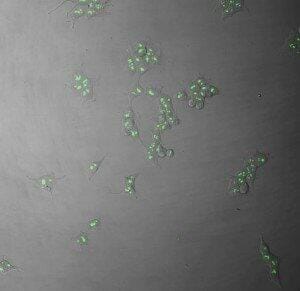
Researchers from Hiroshima University have presented a new gene insertion method called Precise Integration into Target Chromosome (PITCh). The method uses existent gene editing technologies more effectively. The...

Basic Research

Diamonds Increase Sensitivity of NMR and MRI

Researchers from the U.S. Department of Energy (DOE)’s Lawrence Berkeley National Laboratory (Berkeley Lab) and the University of California (UC) Berkeley have hyperpolarized carbon-13 nuclei in...

Basic Research

Wireless Transmitter Powered by Urine and Microbes

Researchers from the University of the West of England (UWE) have created a wearable wireless transmitter powered with urine. The user carries microbial fuel cells (MFCs)...

Basic Chemistry

Inocuous Nanotechnology-Based Sunscreen Tested in Pig and Mice

Researchers from Yale University funded by the National Institute of Biomedical Imaging and Bioengineering (NIBIB) have developed a sunscreen based on nanoparticles that carry UV-blocking elements. The particles...

Bioengineering

3D Map of Human Genome Helps Understand Gene Regulation

Researchers from Whitehead Institute have solved the 3D structure of the human genome in human adult cells and embryonic stem cells (ESCs). Knowing the location of genes...

Basic Research
AI scientist

Machine Learning is Now Closer to Human Learning

Researchers from the Massachussets Institute of Technology, University of Toronto and New York University have developed an algorithm that allows machines to learn like humans,...

Basic Research

Cancer-related DNA Replication During Mitosis

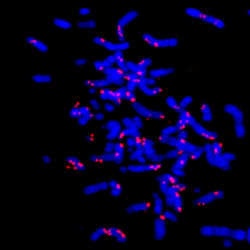
Researchers from the University of Copenhagen have discovered that some parts of the genome don´t replicate during S-phase, but only after entering mitosis. The genomic...

Basic Research

The Thinnest Material that You Can Handle

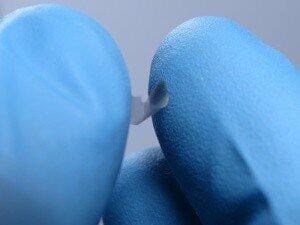
Researchers from Penn University have developed the thinnest film that can be manipulated. The aluminum oxide corrugated plates, thousands of times thinner than a paper sheet,...

Basic Research