
| Votes | By | Price | Discipline | Year Launched |
| OpenAI | LIMITED ACCESS | Interdisciplinary |
GPT-Rosalind is OpenAI’s limited-access model aimed specifically at life-science research and drug discovery, and its entry into a field previously dominated by DeepMind and a cluster of well-funded startups. It arrived alongside a major pharmaceutical partnership, which says a good deal about who it is really built for.
What it does
The model targets research reasoning rather than general conversation — hypothesis generation, experimental interpretation, and the literature-heavy work that precedes a programme decision. Access is gated rather than open, which limits independent evaluation of what it can and cannot do.
Strengths
- Purpose-built for life-science reasoning rather than adapted from a general model.
- Backed by the compute and evaluation resources of a frontier lab.
- Benchmarked publicly against hard life-science tasks.
- Industrial validation through pharmaceutical deployment.
Limitations
Limited access is the central caveat: a model most researchers cannot obtain is not yet a tool most researchers can use, and gated availability makes independent verification of its claims difficult. Benchmark performance is not the same as usefulness on your problem. See our coverage of its LifeSciBench results and its launch.
Similar Tools
 Biomni
General-Purpose Biomedical AI Agent
Biomni
General-Purpose Biomedical AI Agent
 Google Co-Scientist
AI Agent for Hypothesis Generation
Google Co-Scientist
AI Agent for Hypothesis Generation
 OpenScience
Open Source AI Science Workbench
OpenScience
Open Source AI Science Workbench
 Claude Science
AI Science Workbench for Research Labs
Claude Science
AI Science Workbench for Research Labs
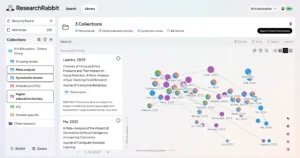 Research Rabbit
Citation Graph Explorer for Literature Discovery
Research Rabbit
Citation Graph Explorer for Literature Discovery
 Undermind
Deep AI Literature Search Assistant
Undermind
Deep AI Literature Search Assistant
Do Other Researchers Need to Know About Your Research?
Submit a draft explaining your research, our experts will edit and share it with the world.
- Ground Breaking Findings that Accelerate Research
- Tools and Tricks that Help Researchers
- Advice to Save Time and Money in Laboratories
Reachout to Researchers with Our Extensive Marketing Network
Modern scientific marketing partner built for life science brands