Universal Lab Hardware Communication Standard for AI by Anthropic
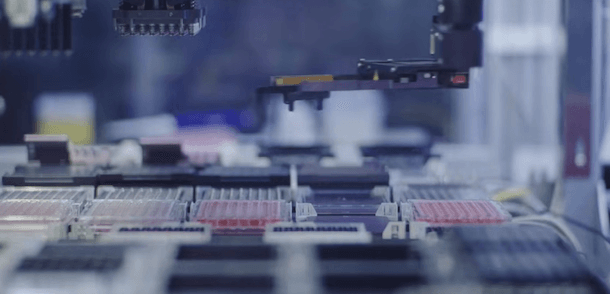
Anthropic just gave a sneak peek into its newest hardware communication standard that allows AI to work better with automation in wet laboratories. Currently being called as the Model Hardware Standard (MHS), it provides a common framework for enabling AI models to safely and efficiently interact with physical laboratory equipment. It is designed to support everything from analytical instruments such as spectrometers and microscopes to essential lab hardware including centrifuges, vacuum pumps, liquid handlers, and robotic systems. Announcements of industry participation is limited at this stage.
The announcement surprisingly comes just a day after we published our article on lack of a universal inter-manufacturer standard for communication. MHS is designed as a universal communication and handling standard built with collaboration between Anthropic and HHMI Janelia Research Campus. The aim of the standard is to automate intricate tasks such as running hundreds of drug discovery experiments to more complex and manually demanding tasks such as laser calibration of quantum computers.
Biggest Hurdle to Lab Automation
Our previous article highlighted the challenges faced by lab automation. Lad automation engineers spend months trying to get different equipment to work with each other. Each manufacturer has his owe preference of codebase, UI, data formats and even error & operation codes that make working with all of them in tandem a challenge. Even with open API’s the challenge remains in understanding these and integrating them with a central AI enabled lab automation brain.
Current lab communication standards haven’t succeeded in getting mass adoption from manufacturers, with largest manufacturer’s such as Thermo Fisher, Danaher Corporation, Agilent and others staying away from integrating these into their equipment lineup. Even when there is clear precedence from other sectors such as automobile, internet and even home automation.
MHS’s Solution: A Central Driver
MHS aims to bring order to our fragmented landscape of laboratory hardware by introducing a standardised driver that acts as a translator between an AI agent and the physical lab tech it needs to operate.
The AI agent communicates its intent through a small set of standard commands—such as read, write, start/stop—rather than needing to understand the unique language, interface, or protocol of every individual instrument. The MHS driver then translates these commands into instructions the specific piece of hardware can understand, while also interpreting the responses and data it receives in return. It helps AI work with any kind of lab tech, regardless of the manufacturer, make and model. It allows lab automation engineers to train on new tech by tags that better help
In many ways, it acts like an interpreter in a game of dumb charades: the AI knows what it wants to accomplish, the hardware understands its own language, and the MHS driver bridges the gap between the two. Designed to work with whatever input/output is available: API’s command line interface or the model context protocol.
Some companies have already used MHS to orchestrate their automated laboratories:
Genentech Liquid Automation
Genentech used MHS to coordinate protein measurements that required coordination between a liquid handler, a plate reader, microplate readers and a robotic arm.
University of Washington/Pinglay Labs Automated PCR
Researchers at University of Washington used MHS to remotely monitor PCR steps with AI integrated to halt the step when necessary without human intervention.
Carnegie Mellon University
Used MHS to automate the universally hated serial dilution dose response experiments. The experiment orchestrated a liquid handler, a plate reader and a robotic arm to run experiments three times faster than the previous semi automated process they had in place.
HHMI Janelia Research Campus
The best and the most impressive example comes from the co-builder of the MHS themselves who orchestrated 7 different instruments, in different programming languages from different manufacturers to work in tandem with femtosecond accuracy. With no conventional way to talk between these instruments, MHS enabled point-to-point connections with a single interface that helps in less confusion and a flawless operating with an AI agents guiding all experiments. Researchers developed a shared memory dictionary that enabled the instruments to communicate with one another at memory speed and make instant decisions.
Standardised Future of Automation
Many other companies that are looking into MHS or are already experimenting with it: Amazon Web Services, Automata, lab equipment giants such as Danaher and MBF Bioscience, Doosan Robotics and many more. Hopefully other companies will follow suit and integrate MHS and make it truly a universal lab standard.
For now, MHS can only work directly with equipment that already has a programmable interface. Other instruments may require dedicated MHS-compatible drivers to enable communication between the hardware and an AI agent.
For MHS to evolve into a truly universal standard, however, significant work still lies ahead. More hardware manufacturers will need to adopt the standard and develop compatible integrations across their product lines. Beyond the technical challenge, there is also a human one: researchers and laboratory teams will need to become comfortable using AI agents to interact with and control physical equipment.
That said, the fact that a company like Anthropic is taking an active interest in laboratory automation—and bringing industry participants into the conversation—is an encouraging sign. It suggests that the idea of a common interface between AI systems and scientific hardware may be gaining the momentum needed to move from an ambitious concept to a practical industry standard.
Reachout to Researchers with Our Extensive Marketing Network
Modern scientific marketing partner built for life science brands