
Medicine Nobel Prize 2026: Cellular Light Switch That Rewired Neuroscience
Reachout to Researchers with Our Extensive Marketing Network
Modern scientific marketing partner built for life science brands


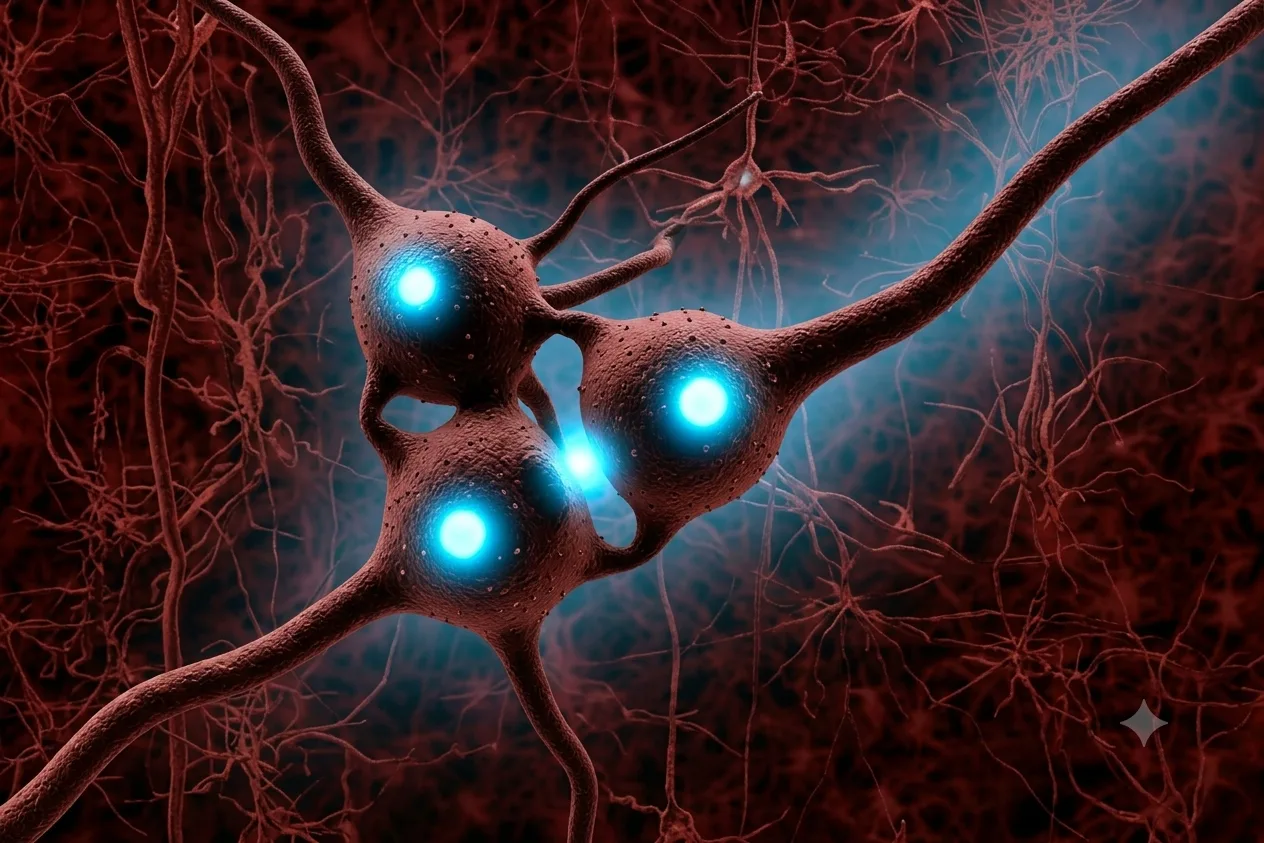
The 2026 Nobel Prize in Physiology or Medicine was today awarded to Karl Deisseroth, Peter Hegemann and Georg Nagel for optogenetics: the discovery of light-gated ion channels, and their conversion into a switch that turns chosen neurons on and off in milliseconds. The three split 12 million Swedish kronor, roughly $1.2 million (STAT) for a discovery that sits among CRISPR in helping unravel the mysteries of the cell.
Among working neuroscientists the reaction was less surprise than relief. Optogenetics has sat on Nobel shortlists for the better part of a decade, and Nature ran its news story beside a companion piece asking what had taken so long (Nature). For readers of this site the timing is useful for a second reason. The light-to-cell interface the committee just honoured is now being pushed well past switching, toward writing genetic instructions outright, which is something that even DARPA is intertersted in and what we examined in Generative Optogenetics: When Light Becomes Code and Cells Become Computers.
It is worth being clear about what was actually new. Nearly every other use of light in biology is observational: microscopes, fluorescent reporters, imaging of all kinds. Deisseroth told STAT that optogenetics runs the other way, using light to make something happen in a cell rather than to collect information from it (STAT). Watching the brain became intervening in it, under experimental control. That is what is being recognised.
The prize at a glance
Per STAT, the citation covers discoveries concerning light-gated ion channels and optogenetics. Each laureate holds a different link in the chain, which runs from algal photobiology to mammalian neurons.
| Laureate | Affiliation | Contribution | Landmark paper |
|---|---|---|---|
| Peter Hegemann | Humboldt University of Berlin | Long-running study of how the alga Chlamydomonas reinhardtii senses light; hypothesis that its photoreceptor and ion channel are one protein | Nagel et al., Science 296, 2395 (2002) — channelrhodopsin-1 |
| Georg Nagel | University of Würzburg | Electrophysiology that proved the algal rhodopsins are directly light-gated channels; showed function in foreign cells | Nagel et al., PNAS 100, 13940 (2003) — channelrhodopsin-2 |
| Karl Deisseroth | Stanford University / HHMI | Expressed channelrhodopsin-2 in mammalian neurons and fired action potentials with blue light; built the wider toolkit | Boyden et al., Nature Neuroscience 8, 1263 (2005) |
Sources: affiliations and references per Nature and STAT.
From Algal Eyespot to a Universal Ion Channel
Optogenetics started with pond scum, literally! Chlamydomonas reinhardtii, a single-celled green alga was observed to swim toward light, and Peter Hegemann spent years working out the mechanism. His photocurrent measurements pointed at something odd: the light sensor and the ion channel in the alga’s membrane looked like one molecule rather than two coupled ones (Gairdner Foundation).
This confirmation needed an electrophysiologist and that where Georg Nagel came in. He introduced new methods, which included the confirmation of the two-electrode recording in frog oocytes. Collaboration showed that the algal rhodopsins open a pore directly on absorbing a photon (Hegemann & Nagel, EMBO Mol Med). Their 2002 Science paper described channelrhodopsin-1, a light-gated proton channel. The 2003 PNAS paper, written with biophysicist Ernst Bamberg, showed channelrhodopsin-2 to be cation-selective, opening almost as soon as light reaches it, and working in frog oocytes and mammalian cells alike (PNAS abstract).
Everything that followed rests on that last paper. One gene, needing only retinal as a cofactor, produced a working light-operated channel in cells that had never had any reason to see. STAT puts the finding the same way: the protein worked in whatever cell they put it into (STAT). Any genetically addressable cell type could now be handed a light switch.
Let there be Light!.. in Neurons
Karl Deisseroth, a psychiatrist and bioengineer at Stanford, brought it into neuroscience. His lab, with Nagel and Bamberg among the co-authors, put the channelrhodopsin-2 gene into rat neurons and found that blue light made them fire and signal onward to other cells (Nature). The 2005 Nature Neuroscience paper founded the field and introduced the word ‘optogenetics’ to researchers around the world.
Nothing similar existed before in terms of controlling neurons with light. Electrodes excite whatever sits near the tip. Drugs act over minutes, lesions permanently. Optogenetics handed neuroscience a clean causal experiment instead: drive or silence a defined circuit, then see whether the behaviour moves. Hegemann and Deisseroth went on to spend well over a decade pulling the protein apart at the level of the individual amino acids governing ion flow, kinetics and colour (Gairdner Award essay, PMC), which is where today’s red-shifted, faster and inhibitory variants come from.
Rui Costa of the Allen Institute credited Deisseroth with something besides the discovery: distributing tools and reagents at scale (Nature). That matters more than it sounds. Free distribution is a good part of why thousands of labs picked the technique up as quickly as they did.
Other Prominent Contributors to Optogenetics
The three-laureate limit has again left credible contributors off the list. Optogenetics was assembled by a community, and the omissions were being argued over within hours of the announcement.
| Contributor | Contribution | Status in 2026 |
|---|---|---|
| Ed Boyden (now MIT) | First author of the 2005 Nature Neuroscience paper, as a PhD student in Deisseroth’s lab | Not named; commentators argued he should not have been excluded (STAT) |
| Ernst Bamberg | Co-author on the 2003 channelrhodopsin-2 paper and the 2005 neuron paper | Not named |
| Gero Miesenböck | First genetic light-sensitisation of non-photoreceptive neurons, 2002 | Cited in the committee’s background material, per STAT |
| Zhuo-Hua Pan (Wayne State) | Expressed channelrhodopsin in retinal ganglion cells in 2004; paper delayed to 2006 | Cited in background material, per STAT |
The committee chair would not discuss how the three were chosen, and Deisseroth spent his first interviews crediting collaborators, students and postdocs across many years (STAT). Other prizes drew the line elsewhere. The 2013 Brain Prize went to six optogenetics pioneers, Boyden, Bamberg and Miesenböck among them; the 2018 Gairdner named Hegemann, Deisseroth and Boyden (PMC).
Pan’s case should interest anyone who works on research funding. STAT reports that NIH reviewers backed his proposal as strikingly original and close to uncharted, awarding $300,000. The resulting paper then sat in review and did not appear until 2006, by which point the Stanford work had already defined the field. Priority in science is partly a contest in publishing speed.
From Experiments to Clinics
The technique’s main contribution so far is to the understanding of disease rather than the treatment of it. Circuit-level work in animals feeds research on depression, schizophrenia, Parkinson’s and Alzheimer’s (Nature). In human’s the findings have led to understanding human retina, for the obvious reason that the eye is transparent and is easy to transmit light and see the effects of the experiment.
A team under José-Alain Sahel and Botond Roska, sponsored by GenSight Biologics, reported in Nature Medicine that a blind patient with late-stage retinitis pigmentosa regained partial visual function after an AAV gene therapy carried the red-shifted channelrhodopsin ChrimsonR into retinal ganglion cells (IOB Basel). The therapy, GS030, is a gene plus a pair of goggles that amplify incoming light to the right wavelength and intensity, since engineered ganglion cells are nowhere near as sensitive as real photoreceptors (EURETINA).
Its attraction is that it works regardless of which gene caused the blindness, rescuing function downstream of the dead photoreceptors. Nanoscope’s broad-spectrum opsin MCO-010, in retinitis pigmentosa and Stargardt disease, has reported improvements in vision-guided mobility and acuity (Ophthalmology Management). Those are company-reported figures and still want fuller peer-reviewed scrutiny.
Outside the eye the obstacles are physical and regulatory in roughly equal measure: delivering genes safely into human neurons, and then getting photons deep into tissue without an implant. Nagel believes that the nobel prize came early, since other discoveries have helped far more patients than this one has (TIME).
Light as a Way to Cure Diseases
What the prize honours is, in computing terms, a one-bit interface. Light arrives, the channel opens, ions move, the cell fires or goes quiet. The frontier we covered in Generative Optogenetics: When Light Becomes Code and Cells Become Computers asks something harder: what if the light carried information instead of a trigger?
That is the premise behind DARPA’s Generative Optogenetics (GO) programme, run by program manager Matthew Pava, which aims to use light to direct the synthesis of DNA and RNA inside living cells (DARPA). Its central engineering problem is a construct DARPA calls a nucleic acid compiler, likened in the agency’s own materials to a 3D printer for genetic material sitting inside the cell: light patterns encode bases, the cell assembles the strand. No such machine exists. Pava has been candid that he does not know whether it is possible yet. Reported performers include Flagship Labs 116, UC Santa Barbara, the University of Washington, Princeton, Columbia and Conveyor Belt Industries (Indian Defence Review, summarising Popular Mechanics).
There is a second and much nearer sense of generative in play, and it is the one likely to reach ordinary labs first: using protein-design models to invent opsins (light-sensitive proteins that bind to a molecule called retinal to convert light into electrochemical signals for vision, non-visual light perception, and optogenetic control of neurons) evolution never produced. Every channelrhodopsin in service descends from a handful of natural algal sequences, hand-engineered variant by variant ever since. Treat opsin sequence space as a design landscape instead, tuning absorption further red, off-kinetics faster, ion selectivity to order, and you have an obvious application for the structure-prediction and protein-generation tooling we surveyed in The Eleven Types of AI Every Researcher Now Works With.
Stated plainly, the line runs like this. Hegemann and Nagel found a protein that made cells addressable at all. Deisseroth made them addressable by type. The generative wave proposes to make the address space itself designable, and on DARPA’s most ambitious reading, to send payloads rather than pulses. Every step widens the interface. Every step also moves further from anything validated in a person.
Open questions
Does a tool deserve a medicine prize before it has treated many patients? Nagel raised the point himself. Optogenetics has produced an enormous amount of mechanistic insight and one credible clinical signal in a rare retinal disease. Judged on patients helped, it is early. Judged on discovery enabled, it is late, which is how Nature‘s companion piece read it.
How badly does the three-person cap distort the record? Four well-documented contributors sit outside this award, two of them named in the committee’s own background material. The cap comes from Nobel’s will rather than from any judgement about merit, but the public reads a laureate list as a credit list.
Will delivery stay the bottleneck rather than the proteins? Better opsins are now the easier half of the problem. What gates every indication beyond the retina is getting a gene into the right human neurons and photons to them afterwards. No amount of protein design fixes AAV tropism or the skull. Will we see any developments beyond this?
Is the nucleic acid compiler a research programme or a research hypothesis? Its own program manager will not claim feasibility. DARPA’s documents also list biosecurity risks: deliberate synthesis of harmful agents, unintended byproducts, engineered systems defeating containment. The agency says independent regulatory and security review is planned. That is the right posture. Whether the oversight keeps pace is a different question.
Who will own the next generation of opsins? Natural channelrhodopsins circulated freely, and that openness built the field. AI-designed opsins tend to arrive with a patent strategy attached. Should the generative wave produce a dominant tool under restrictive licensing, the distribution model Costa praised does not carry forward by itself.
Outlook
For anyone buying equipment, this prize marks a category that matured some time ago. Optogenetics rigs, meaning patterned illumination, two-photon holographic stimulation, fibre photometry and opto-electrophysiology, are a standard line item in systems neuroscience now, with a settled vendor landscape and the usual consumable and licensing questions sitting underneath.
The movement worth watching is upstream. For twenty years the opsin was a fixed natural part and the innovation happened in optics and viral vectors. If design models start producing opsins tuned to order, the centre of gravity shifts back toward molecular tooling, and the competitive question becomes who controls the sequences. DARPA’s GO programme is a reminder meanwhile that the same interface has a defence-funded ceiling well above anything demonstrable today.
Put simply: a 2002 observation about why an alga swims toward light became the most important causal tool in neuroscience within three years, and a partial treatment for blindness within twenty. The prize covers the first two decades. The third is where the questions this site tracks, what the hardware costs, what the reagents cost and who licenses what, get settled.
