Biohub: Virtual Cell Bet Gets 1.8 Billion
- Largest Investment in Virtual Cells
- What is a virtual cell, in plain terms?
- Other Ambitious Virtual Cell Attempts
- AI Could Make the Difference
- Our Take: Five Lessons from “The elusive virtual cell”
- 1. Define the question before you fill the warehouse
- 2. Don’t let the cheapest measurement define the cell
- 3. Benchmarks are a tool, not the goal
- 4. The territory is the territory
- 5. Data is not understanding
- Who else is Competing to Build a Virtual Cell
- What it means at the bench
- Open questions
- Outlook
Reachout to Researchers with Our Extensive Marketing Network
Modern scientific marketing partner built for life science brands


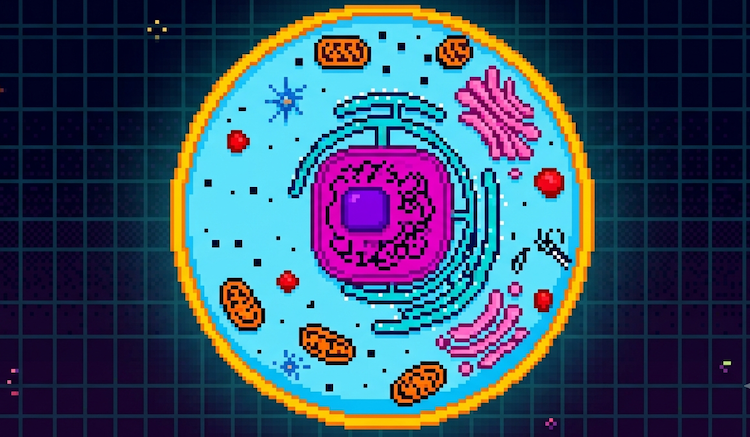
Google DeepMind, Isomorphic Labs, Meta, the US Department of Energy and NIH are investing in Biohub’s Virtual Biology Initiative. The money will primarily be invested in purchasing cell data and even creating new data in Dark Laboratories. Whether it leads to a virtual cell depends on a question no press release answers: what, exactly, should a virtual cell predict?
On October 7, Biohub, the AI-first research institute funded by Mark Zuckerberg and Priscilla Chan, annouced at a press conference that its Virtual Biology Initiative now has $1.8 billion in combined commitments of funding, data, computing and measurement technology. The new backers include the US Department of Energy (DOE), the National Institutes of Health (NIH), and a trio of tech companies, Google DeepMind, Isomorphic Labs and Meta. The latter three together are putting in $300 million. The goal is an open, AI-ready dataset big enough to train models that predict how human cells behave to new molecules, so that some experiments can run on a computer before it reached wet labs.
Our take, in brief: this is the right kind of bet, because it pays for measurement rather than for a single model. But the history of cell simulation is littered with well-funded efforts that gathered data faster than they decided what the data was for. Sri Kosuri, co-founder and CEO of drug-discovery company Octant and a veteran of more than 25 years of attempts to build computable cells, laid out why in his essay “The elusive virtual cell”. Read against this week’s announcement, his lessons make a useful scorecard.
Largest Investment in Virtual Cells
Biohub was launched in April 2026 with $500 million of its own; this week’s expansion adds government and Big Tech partners on top. Here is who brings what, per Biohub’s announcement:
| Contributor | Commitment | What it covers |
|---|---|---|
| Biohub | $500M (announced April 2026) | $400M for in-house data and new measurement tools: cryo-electron tomography, microscopy that images millions to billions of cells in living tissue, and engineering tools to perturb biology; $100M for research outside Biohub |
| DOE Office of Science (Genesis Mission) | More than $500M over five years | Measurement, modelling and computation: exascale supercomputers, X-ray and neutron scattering, cryo-EM, autonomous labs, and user facilities such as the Joint Genome Institute |
| NIH (Bio Genesis Mission) | Datasets from more than $500M of past federal investment | Existing repositories and atlases, which Biohub will standardise for AI training |
| Google DeepMind, Isomorphic Labs, Meta | $300M combined | New technologies and multimodal datasets |
| NVIDIA | In kind | Accelerated computing, software and expertise |
| Allen Institute, Broad, Gladstone, Human Cell Atlas, Human Protein Atlas, Wellcome Sanger | Scientific partners | Community strategy and coordination |
| Renaissance Philanthropy | Fundraising | Expanding money for data generation |
Roughly $500 million of the $1.8 billion is the value of data NIH has already paid for, not fresh spending, and DOE’s half-billion is spread over five years. New money is closer to $1.3 billion, which is still large: Biohub calls it the biggest coordinated commitment to AI-ready biological data so far.
The least glamorous deliverable may matter most. Biohub says it will build the layer that lets partners’ datasets work together: shared standards, common identifiers and one point of access. NIH’s Nicole Kleinstreuer framed the ambition as models that can predict how any cell responds to an intervention.
What is a virtual cell, in plain terms?
A virtual cell is a computer model researchers can treat like a real cell in-vitro or even in-vivo. You tell it what kind of cell it is and what you are doing to it, say switching off a gene or adding a drug, and it predics and visualizes what the cell does next. Think of a flight simulator: pilots crash a thousand virtual planes so they never crash a real one.
A successful virtual cell payoff would be enormous. Most drug candidates fail because the biology turns out different from what scientists expected. A model that could screen millions of interventions digitally, and send only the most promising few to the wet lab, would change the economics of discovery.
Today’s versions are narrower than the name suggests. Most are AI “foundation models” trained on single-cell RNA sequencing, which reads which genes are switched on in each individual cell. The workhorse experiment behind them is Perturb-seq: use CRISPR to knock down one gene per cell across thousands of cells, then sequence them all to see how gene activity shifts. The model learns to predict that shift for perturbations it has never seen. Biohub’s plan reaches further, adding cryo-electron tomography, which freezes cells and images their molecular machinery in near-atomic detail, and large-scale imaging of cells inside living tissue.
Other Ambitious Virtual Cell Attempts
Putting a cell inside a computer is a 30-year-old dream, and each wave arrived with new tools and a confident timeline.
| Year | Effort | What it showed |
|---|---|---|
| 2016 | JCVI-syn3.0, the minimal synthetic bacterium | Even a cell stripped to 473 genes held 149 whose function nobody knew |
| 2013 | Human Brain Project, EU, more than €1B over 10 years | Critics warned that simulation was premature without the data or theory to anchor it |
| 2012 | Whole-cell model of Mycoplasma genitalium (Covert lab, Stanford) | Every known gene of a tiny bacterium wired into one simulation; a landmark that did not scale to complex cells |
| Early 2000s | DARPA’s BioSpice, modelled on circuit-simulation software | Mechanistic models from sequence to behaviour; by Kosuri’s own account, too early |
| 1998 | Arkin and McAdams’ stochastic model of phage lambda | Random molecular noise could explain a virus’s “decision” to kill or hide in its host |
| 1995 | E-Cell project, Keio University | One of the first software environments built to simulate a whole cell |
Kosuri has been at the forefront of most of these attemots. As a student in Adam Arkin’s lab he hand-built pathway models from photocopied papers; in Drew Endy’s lab at MIT he rebuilt a model of bacteriophage T7, about as simple and well-studied as organisms get. The result was still underwhelming. His verdict on the era is blunt: thousands of modelling papers fit their data nicely, offered little insight, and failed to predict the missing players that later experiments turned up.
The Human Brain Project is the closer cautionary tale, because it was also a billion-scale, computing-led bet on simulating a biological system. Its critics did not argue that the goal was wrong, only that the measurements and the theory had to come first. Compute was never the bottleneck. Labcritics made a similar point in 2020, when Folding@home’s exaflop milestone grabbed headlines that did not hold up against conventional supercomputers.
AI Could Make the Difference
AI has already cracked one hard biology problem. In 2020, DeepMind’s AlphaFold2 effectively solved protein structure prediction at the CASP14 benchmark, and the field moved within a few years from predicting structures to designing new binders. That lineage now sits inside this initiative: Isomorphic Labs, the Alphabet spin-out Labcritics has followed through its pharma deals with Lilly and Novartis and its proprietary drug design engine, is a founding member. Biohub’s own science is led by Alex Rives, who built Meta’s ESM protein language models before Biohub absorbed his company, EvolutionaryScale, in late 2025.
Measuring cells got cheap. In early 2025 the Billion Cells Project paired 10x Genomics’ single-cell chemistry with Ultima Genomics’ UG 100 sequencer to profile a billion individual cells. Datasets such as Tahoe-100M hold around 100 million drug-perturbed cells. Software stacks like NVIDIA’s BioNeMo now ship single-cell models such as Geneformer off the shelf.
There is finally a scoreboard. In June 2025 the Arc Institute launched the Virtual Cell Challenge, a CASP-style contest to predict how cells respond to gene knockdowns, with a $100,000 grand prize. Competitions like this, and hackathons such as Evolved 2025, give a field an honest, comparable measure of progress.
The first scoreboard was humbling. Arc’s organisers reported that entries did not consistently beat naive baselines across all metrics, and one put it plainly: “We don’t think we have a virtual cell yet.” The 2026 edition raises the bar to zero-shot predictions across several cell lines. That honesty is a strength. It is also a reminder that cheap data and good AI have not yet added up to a working virtual cell.
Our Take: Five Lessons from “The elusive virtual cell”
Kosuri wrote his essay in July 2025, during the last surge of virtual-cell enthusiasm. It is not a dismissal; he welcomes newcomers and resources, and asks only that they not repeat his generation’s mistakes. Here is how his argument maps onto a $1.8 billion data programme.
1. Define the question before you fill the warehouse
Kosuri admits that neither he nor anyone he knows can quite say what a “virtual cell” means. His working test is useful: a model earns its keep when it helps you understand or build something genuinely mysterious, not when it scores well on a fit. He opens with a famous video of a neutrophil chasing a bacterium through a crowd of red blood cells, and asks whether any model could have predicted that chase from where it started.
The initiative’s materials describe the goal as predicting how cells respond to interventions, which is a capability, not a question. Our suggestion: publish a short list of concrete “mysteries” the resource is meant to crack within five years, and let the community argue about it. The Human Genome Project worked partly because everyone knew what “done” looked like.
2. Don’t let the cheapest measurement define the cell
Gene expression is the easiest thing to measure at scale, so it is what most virtual-cell models predict. Kosuri doubts it is the right target. Cells behave robustly despite very noisy expression, and much of what they do, chasing prey and sensing their surroundings among it, may not hinge on fine control of which genes are on.
He lists the other “maps” a cell may need: electrochemical potential, phase separation, compartments and transport, redox and pH state, protein modifications and protein-protein interactions. Here Biohub deserves credit: its $400 million explicitly funds cryo-electron tomography and live-tissue imaging, not just more sequencing. The thing to watch is the spending split once partners start generating data, because transcriptomes are what today’s pipelines, benchmarks and vendors are built to deliver.
3. Benchmarks are a tool, not the goal
Kosuri invokes Goodhart’s law: once a measure becomes a target, it stops being a good measure. Protein AI chased structure-prediction scores, which helped, but its real value showed when it moved on to designing binders that work. The virtual-cell equivalent is not predicting an expression change to two decimal places. It is making a cell do something, or explaining how a cell already does it.
4. The territory is the territory
Kosuri’s own escape from the modelling impasse was to stop simulating and start building. With cheap DNA synthesis, genome editing and sequencing as a readout, a single flask holding around a billion bacterial cells can test a vast library of designed variants at once. He calls this using the living system itself as the model: “the territory is the territory.”
The payoff was causal answers. In one study his team designed tens of thousands of synthetic genes to test why rare codons cluster at the start of genes, and found they raise expression about 14-fold on average by loosening mRNA structure, not for the reasons commonly proposed. Atlases tell you what cells look like; designed experiments tell you why.
That suggests a concrete ask. A meaningful slice of the budget should go to model-guided experiments: let the model flag the predictions it is least sure about, build exactly those, measure them, and retrain. DOE’s mention of autonomous laboratories is the natural home for this, and it is the same closed-loop logic behind startups like Lila Sciences and Medra.ai.
[embed: node/272ff392-240d]
Atlases measure first and model later. In Kosuri’s loop the model chooses the next experiment, so each round targets its weakest predictions.
5. Data is not understanding
Kosuri quotes Sydney Brenner’s 2010 essay “Sequences and consequences”, which mocked an era of “low input, high throughput, no output” biology and argued that only theory turns data into knowledge. Kosuri’s hunch is that the point of these models is to expose causal mechanism. He hedges honestly: engineers built steam engines long before thermodynamics explained them, so useful prediction might come first. Either way, a model that predicts well but explains nothing will struggle to tell you when it is wrong.
Who else is Competing to Build a Virtual Cell
The virtual cell has become a crowded field with it being treated as a Biology millenium problem. The current players fall into five rough archetypes.
| Archetype | Player | Virtual-cell asset | How open |
|---|---|---|---|
| Open data consortium | Biohub (Virtual Biology Initiative) | CELLxGENE, Tabula Sapiens, Billion Cells Project, new imaging and cryo-ET data | Open resource promised; licence terms not yet detailed |
| Nonprofit model builder and referee | Arc Institute | Evo 2 genome model, STATE perturbation model, the Virtual Cell Challenge | Open models, public benchmark |
| Pharma-native | Recursion | Automated phenomics; a published framework arguing virtual cells must predict and explain, with lab-in-the-loop testing | Ideas public, platform proprietary |
| Pharma-native | Isomorphic Labs | Now a founding VBI member; its drug design engine is fully proprietary | Closed models |
| Foundation-model startup | GenBio AI | AIDO, linked models spanning DNA, RNA, protein and cell | Openly released |
| Infrastructure | NVIDIA | BioNeMo, VBI compute partner, Virtual Cell Challenge sponsor | Open frameworks, proprietary hardware |
One pattern stands out. The companies funding open data, Google DeepMind, Isomorphic and Meta, are also among the best placed to turn that data into proprietary models. Open inputs and closed outputs is a reasonable bargain if the data is truly open to everyone on the same day. It is less reasonable if funders get early or privileged access. General-purpose AI labs are circling too: OpenAI’s GPT-Rosalind is pitched as a reasoning layer that could sit on top of exactly these datasets.
What it means at the bench
For the instrument world, this is a demand signal. Whatever a virtual cell turns out to be, building the dataset means buying measurement at a scale few programmes have ever funded.
- Single-cell and sequencing platforms stand to gain first. The Billion Cells Project already runs on 10x Genomics, Scale Bio and Ultima Genomics, and cost per cell will be the number every procurement team squeezes. A decade after Labcritics covered Illumina’s Helix launch on the promise of affordable sequencing, cheap reads have become raw material for AI training sets.
- Imaging at volume is the second front. Cryo-electron tomography is slow and specialist work today, and Biohub’s stated plan to image millions to billions of cells in living tissue will pull money toward faster sample preparation, automated acquisition and high-content microscopes.
- Perturbation and automation tooling, from CRISPR libraries and engineered cell lines to robotic workcells, becomes core infrastructure if the initiative takes Kosuri’s advice and funds designed experiments rather than passive atlases.
For labs that hope to contribute data, the hard part will be discipline rather than hardware. Data pooled from dozens of sites is only useful if protocols, metadata and identifiers line up; otherwise models learn which lab ran the sample instead of what the cell did. Biohub’s promised standards layer will decide how much of the existing data, including NIH’s half-billion dollars’ worth, is actually usable.
Open questions
- How much is new money? About $500 million of the headline is existing NIH data. Partners have not broken down the Big Tech $300 million between cash, compute and in-kind contributions.
- Open to whom, and when? The announcement promises an open resource but gives no licence terms, embargo periods or rules on whether funders see data first. Isomorphic’s move from a semi-open AlphaFold 3 to a fully proprietary design engine shows how quickly openness can narrow downstream.
- Who decides what gets measured? With a dozen institutions and three tech companies at the table, the governance of the measurement agenda is the real lever. Nothing public yet says how that agenda is set.
- Can multi-site data be made consistent? Batch effects have sunk pooled single-cell analyses before. The standards layer is promised, not yet shown.
- What counts as success in five years? A leaderboard score, a validated drug target, or an explained cellular behaviour are very different finish lines.
- What about human data? Commentators have already raised questions about ownership and consent as biological datasets grow. Tissue-derived data needs consent terms that survive being pooled into an open AI training set.
Outlook
The partners hold up the Human Genome Project as their template for a coordination effort no single lab could manage. The comparison is fair and flattering; Labcritics retold how that project reshaped biology earlier this year. But the genome had a finish line: three billion letters, read in order. A virtual cell has no such endpoint unless its builders choose one.
Our bet is that the data will prove valuable whatever happens to the model, much as the Human Cell Atlas has. The model is the harder, slower part, and its fate depends less on the $1.8 billion than on whether the initiative measures what cells actually do and tests predictions by building things. Kosuri signs off saying that if someone succeeds, he wants to help make the perfect mango. We would settle for a model that predicts one surprising thing a cell does, and is right.
A billion cells is a dataset. A question is what turns it into science.